Faculty of Engineering and Information Technology, in Collaboration with AI and Innovation Center at Palestine Ahliya University, Organize OpenMind PAU AI Hackathon 2026
The Faculty of Engineering and Information Technology and the Artificial Intelligence and Innovation Center at Palestine Ahliya University organized the ‘OpenMind PAU AI Hackathon 2026,’ sponsored by Logistics Information Technology Company and Zuwadeh Restaurant, with the participation of students from Bethlehem University and Palestine Ahliya University, representing bachelor’s, diploma, and Master’s programs in Artificial Intelligence and Innovation.
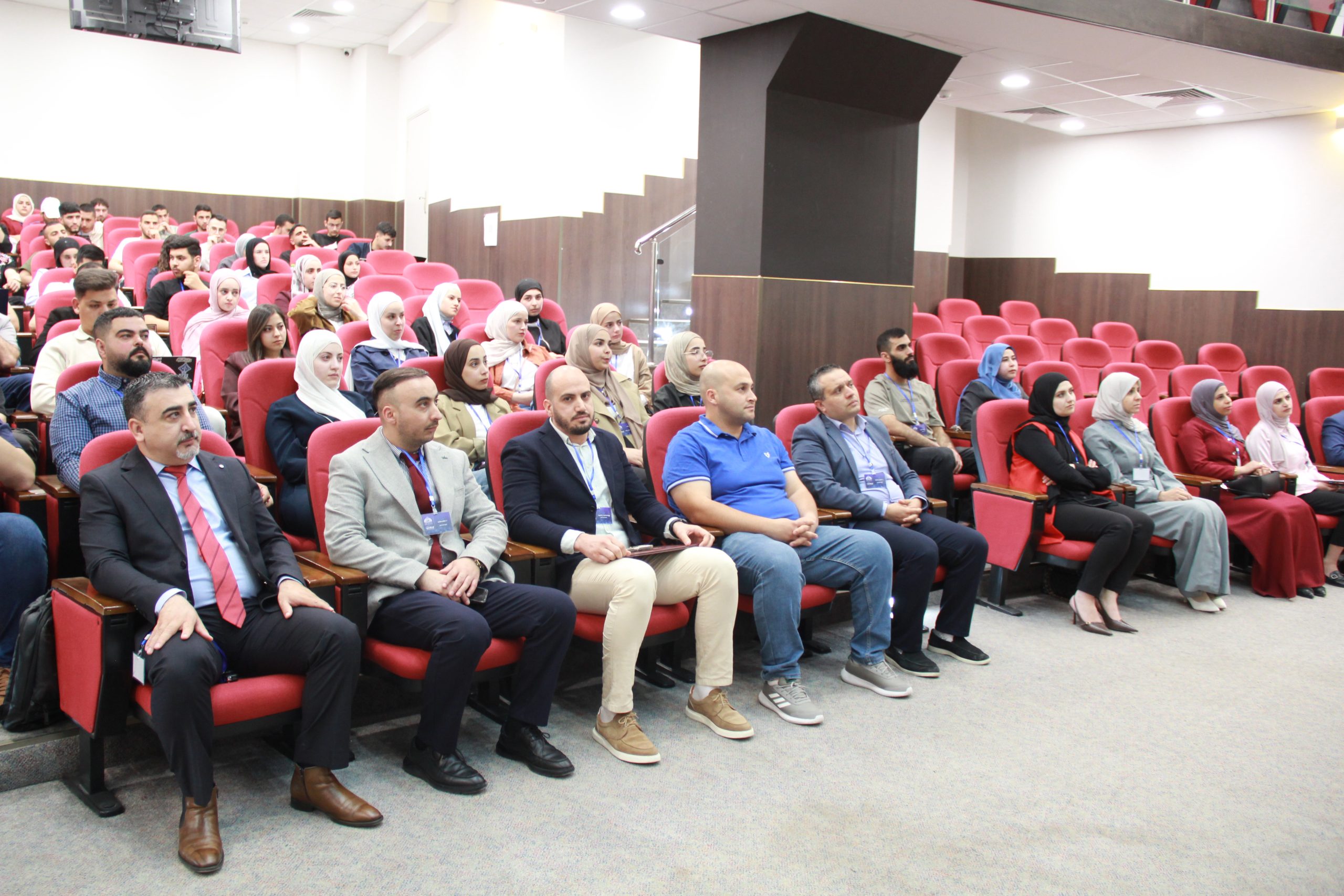
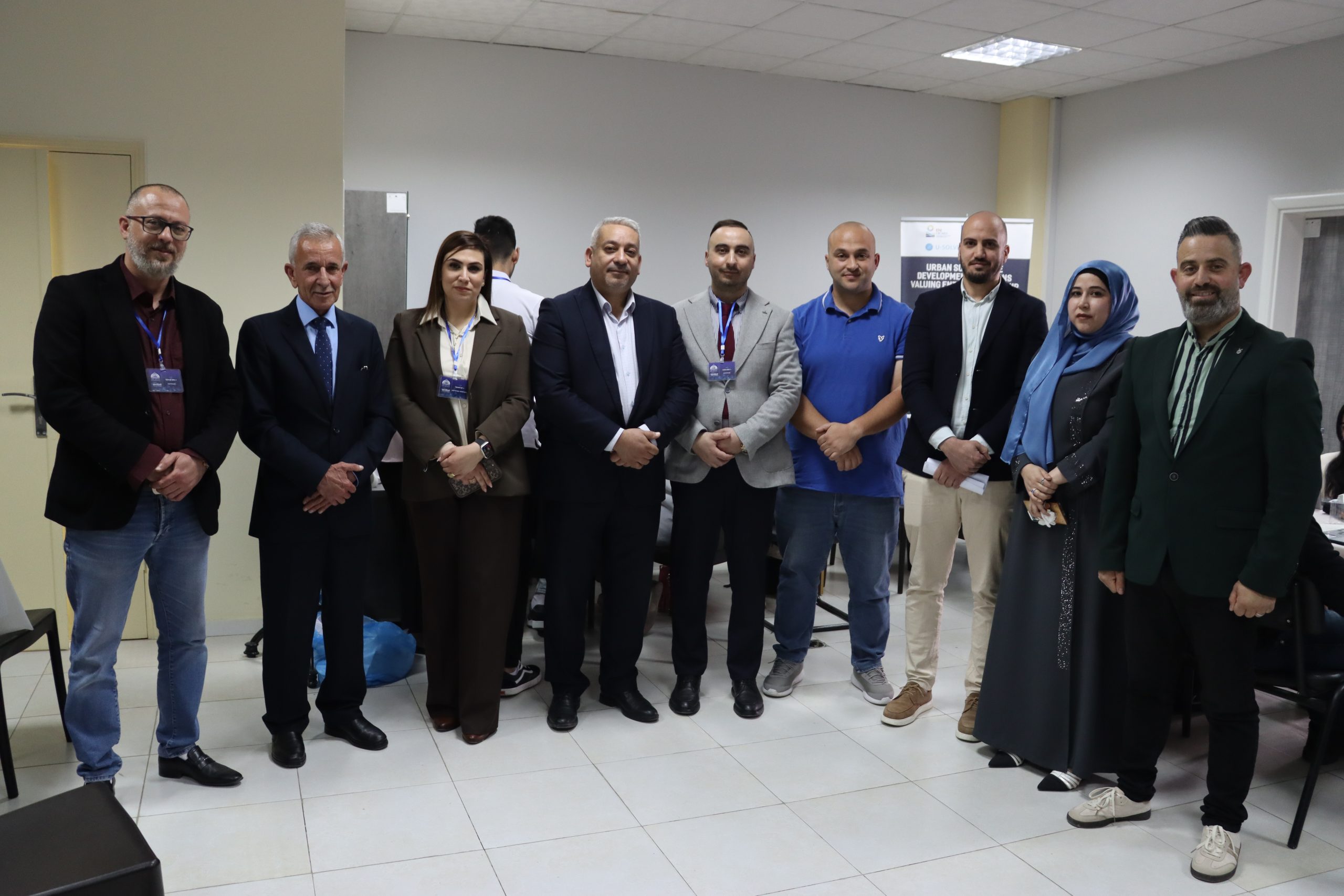
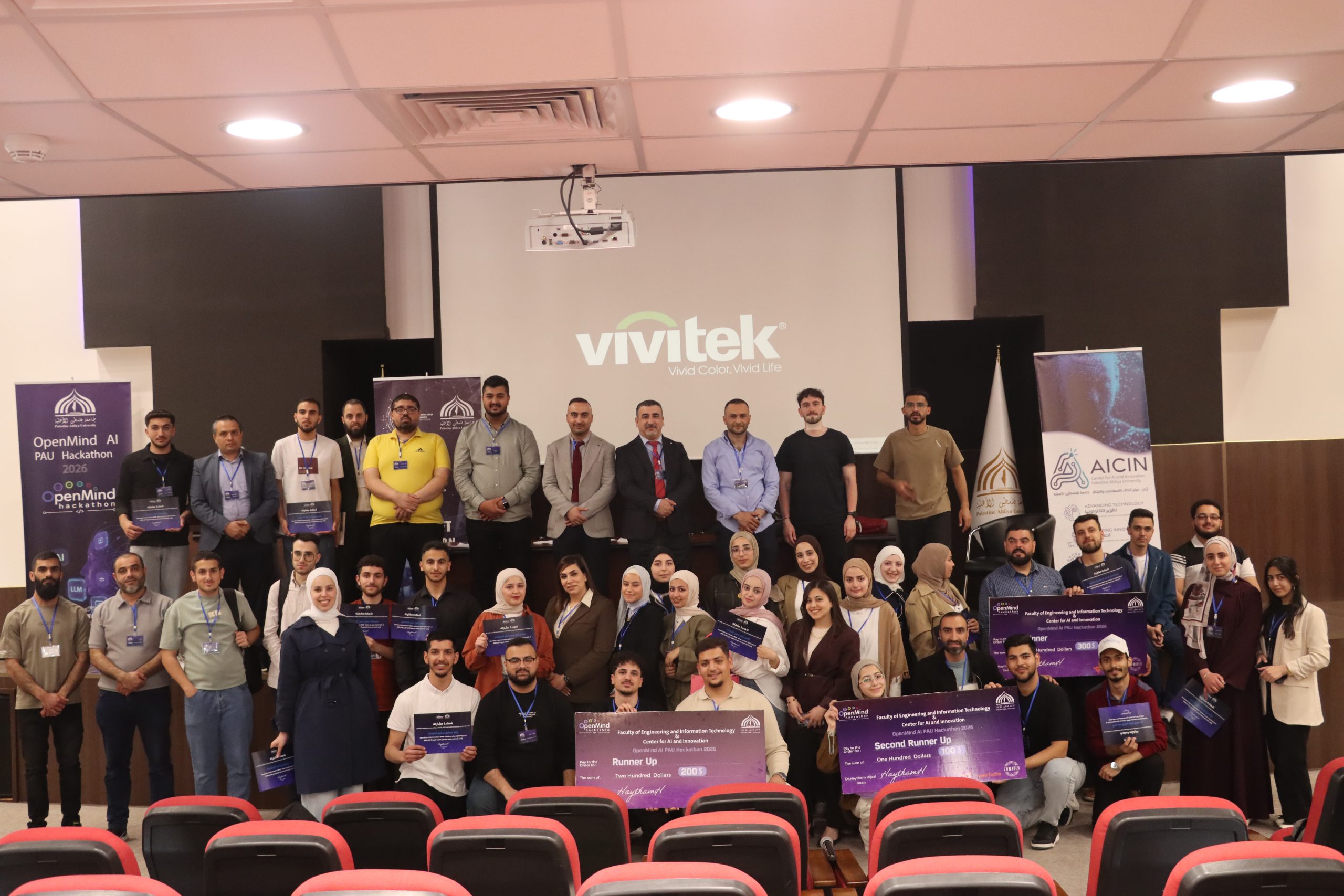
The hackathon witnessed the participation of more than 40 male and female students who gathered to develop ideas and minimum viable products (MVPs) in key fields serving the community. These included education and learning, business, medical services, information technology services, and cybersecurity. The event relied on modern artificial intelligence tools and technologies and was attended by representatives from Logistics Company, along with a team from Bethlehem University.
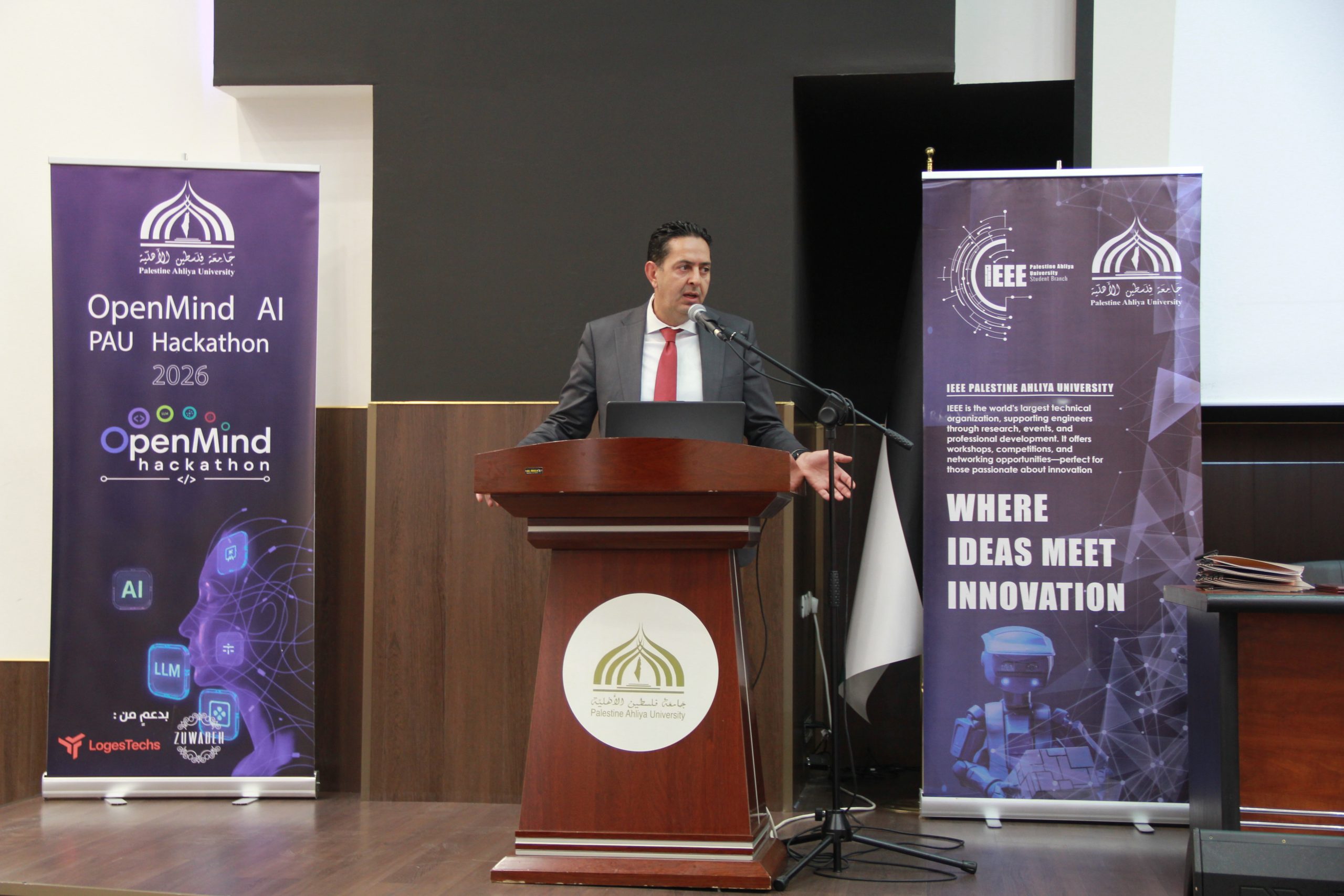
The University President, Prof. Imad Al-Zeer, welcomed the participants, emphasizing the university’s orientation toward smart digital transformation and investment in artificial intelligence technologies, as well as its support for initiatives that foster innovation and entrepreneurship among students.
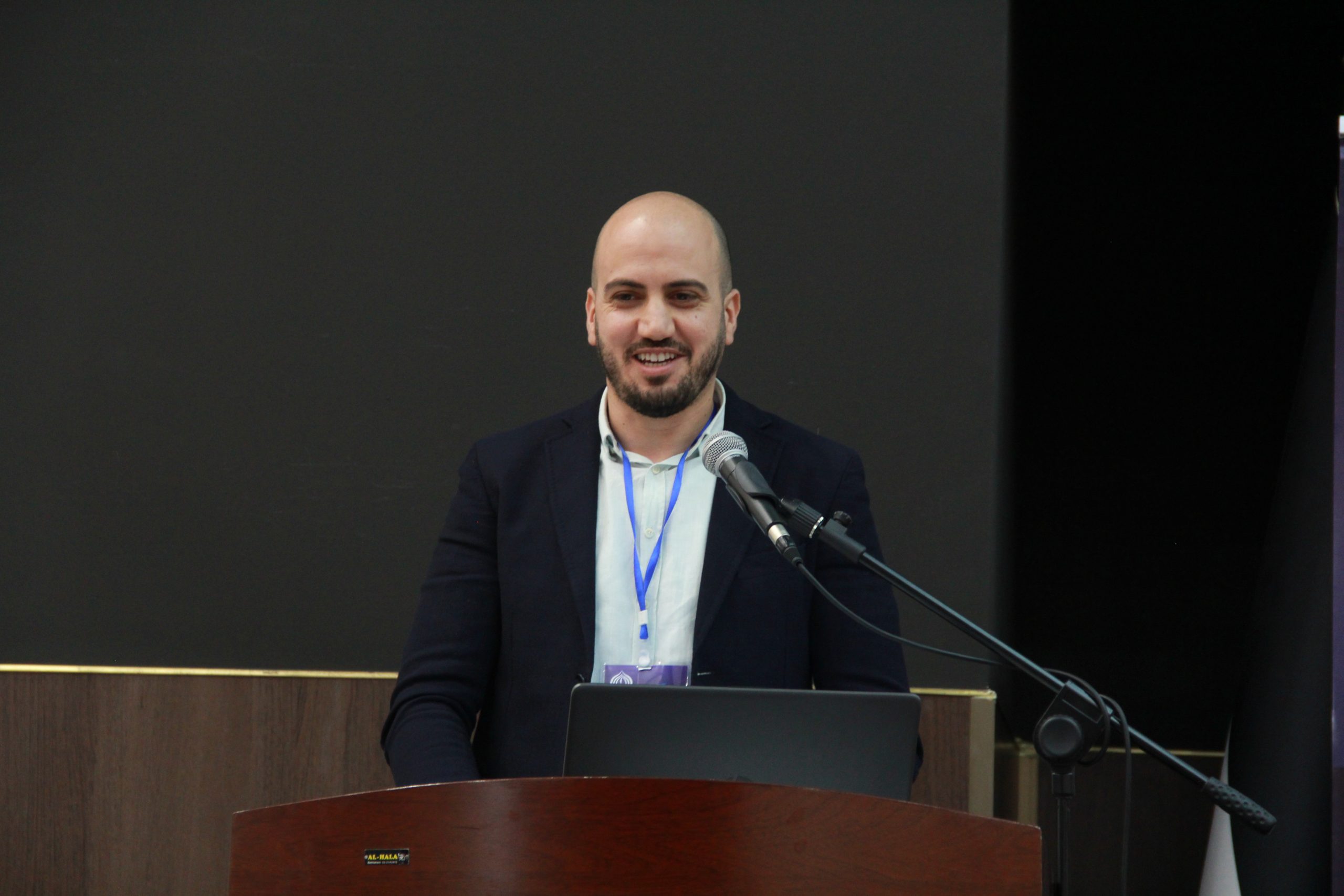
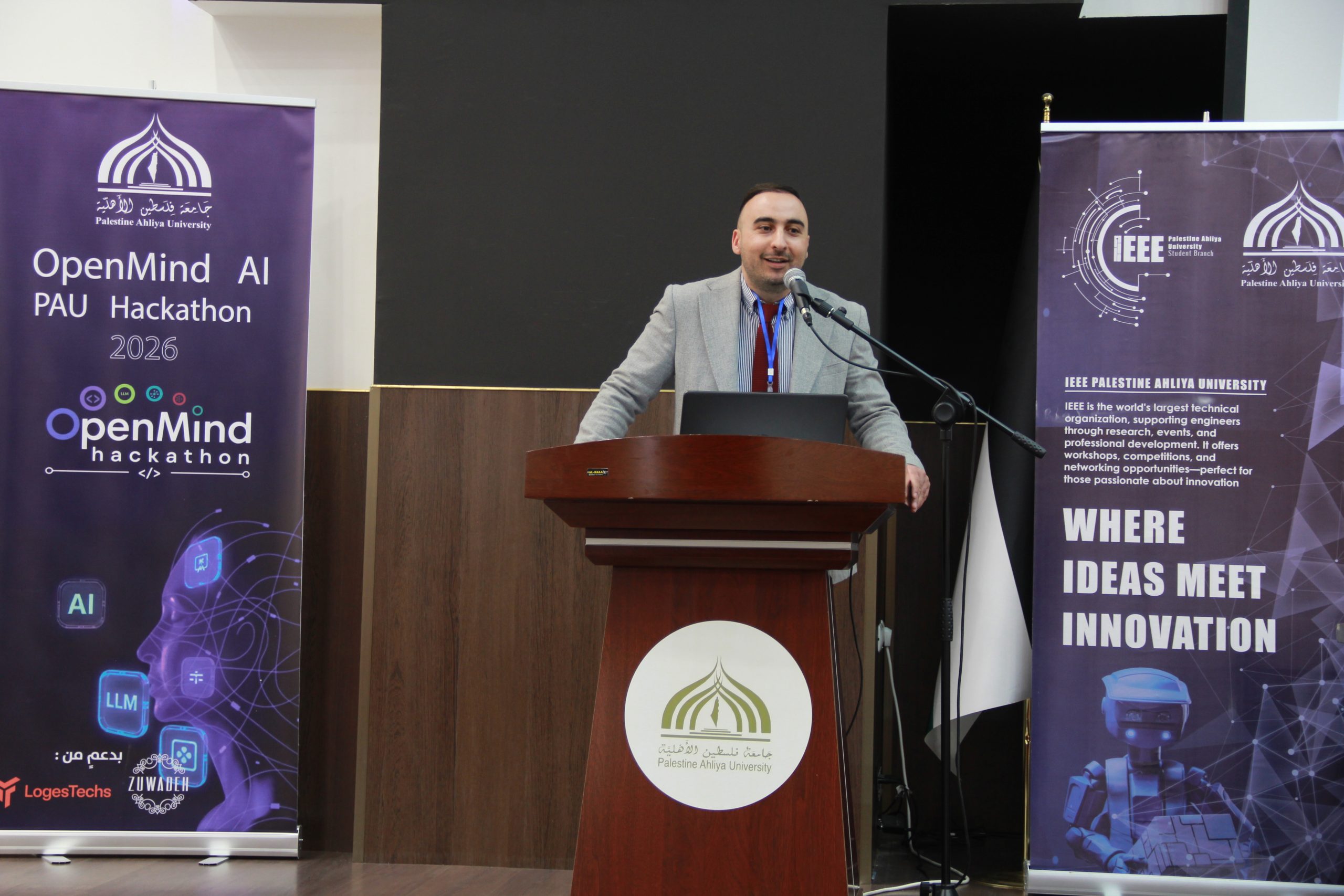
Dr. Haitham Hijazi, the Dean of the Faculty of Engineering and Information Technology and Director of the Artificial Intelligence and Innovation Center, also spoke about the importance of creating real economic value in light of the significant advancements in intelligent programming tools and Vibe Coding techniques. He noted that the current stage opens up new opportunities for students and developers to build digital solutions and products with unprecedented speed and efficiency.
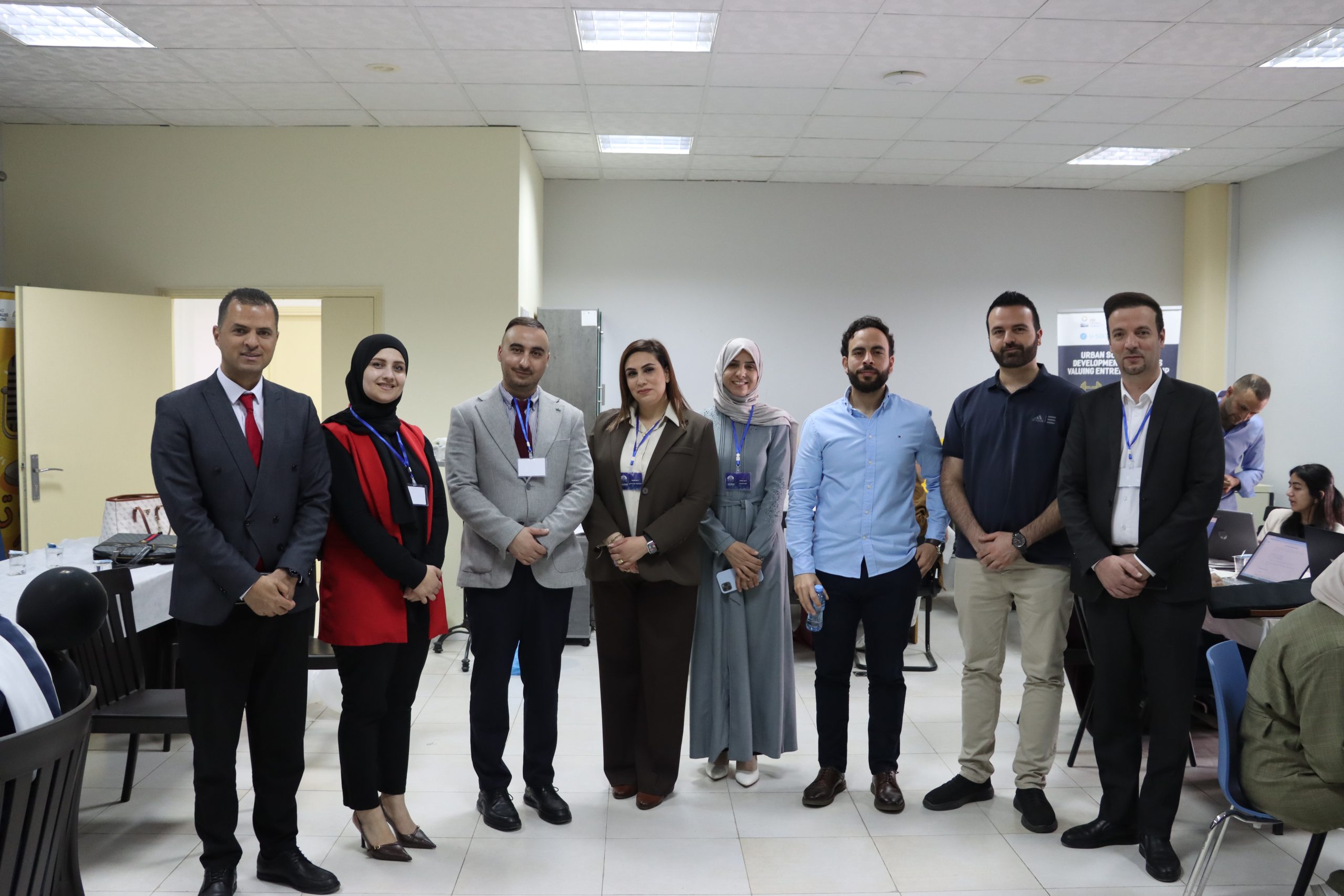
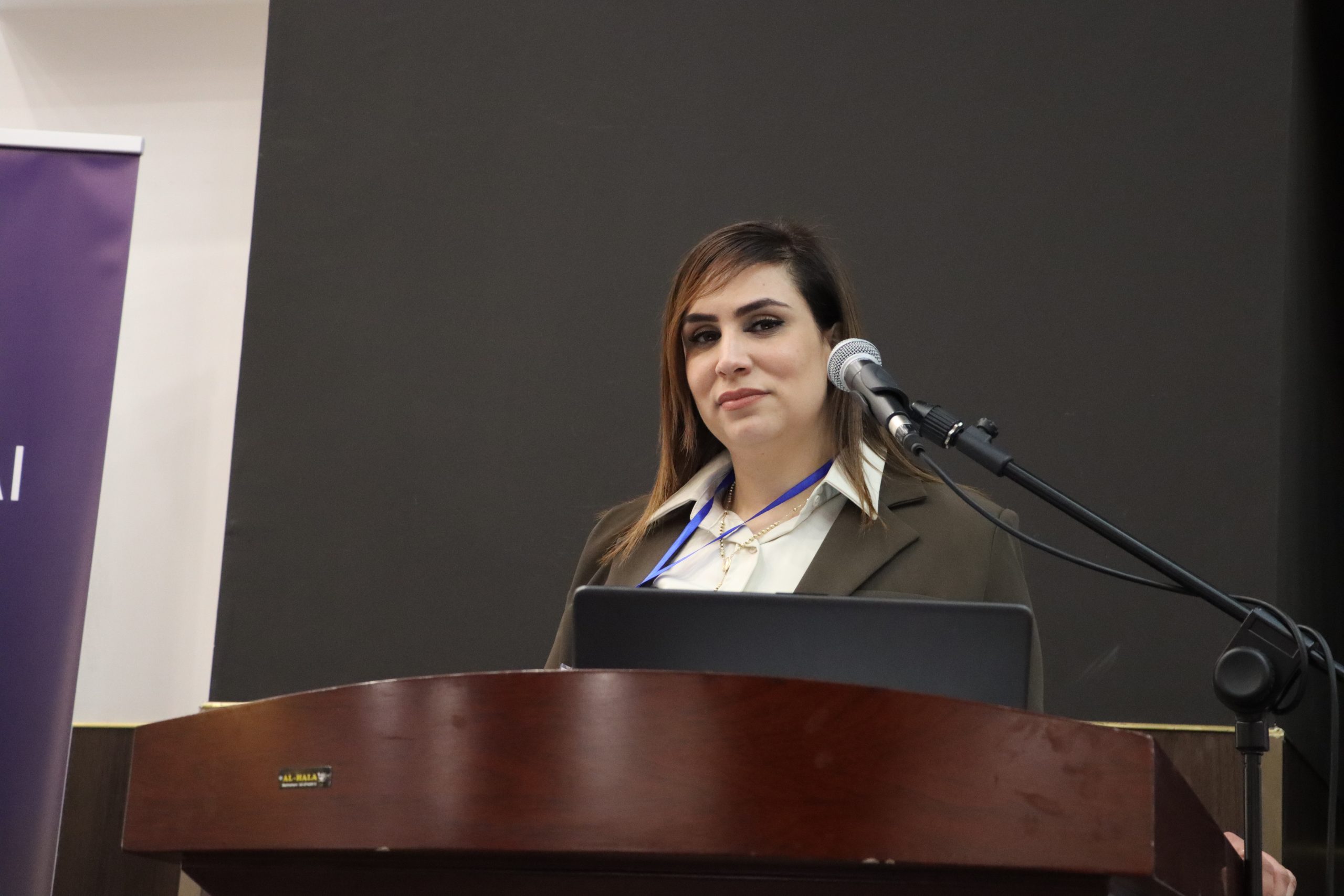
For her part, the hackathon coordinator, Dr. Emma Qumsiyeh, outlined the hackathon guidelines, as well as the evaluation mechanisms and the criteria adopted for selecting the winning projects.
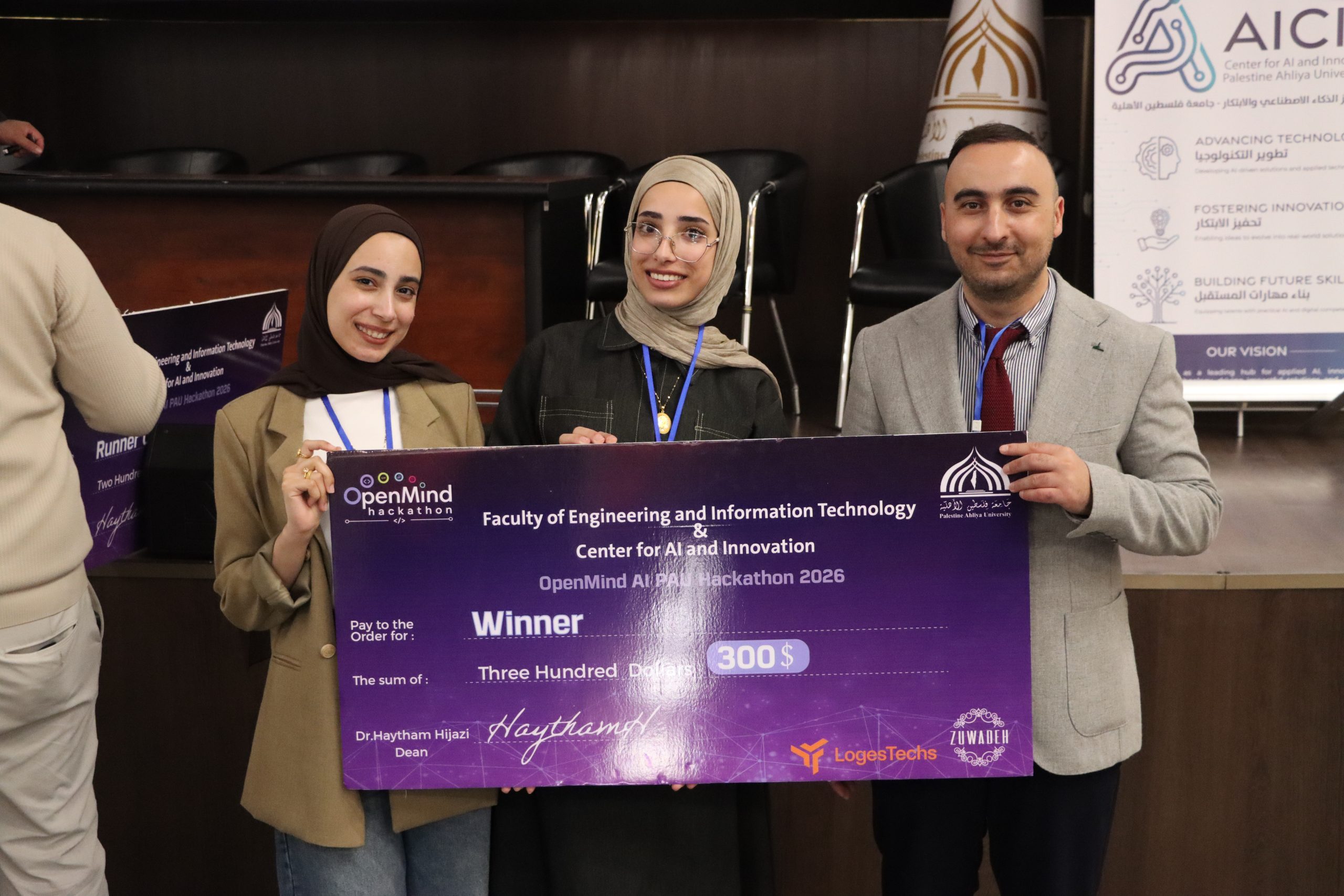
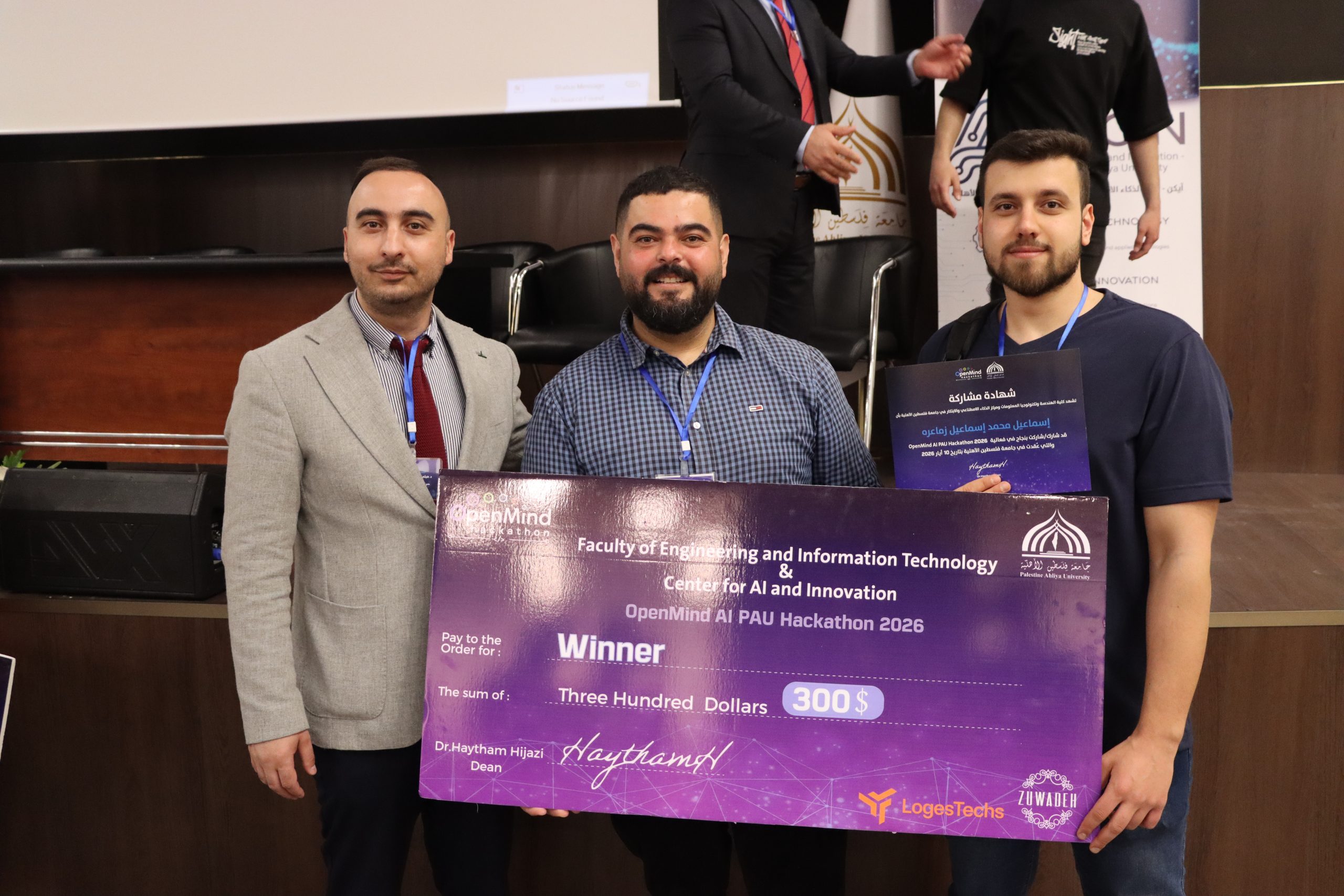
At the end of the hackathon, first place was awarded to the project “Hack to the Future,” an artificial intelligence-based platform designed to identify research gaps in a reliable manner across various components of scientific research. In addition, it provides researchers with in-depth discussions and comprehensive analyses of research issues that are subject to debate.
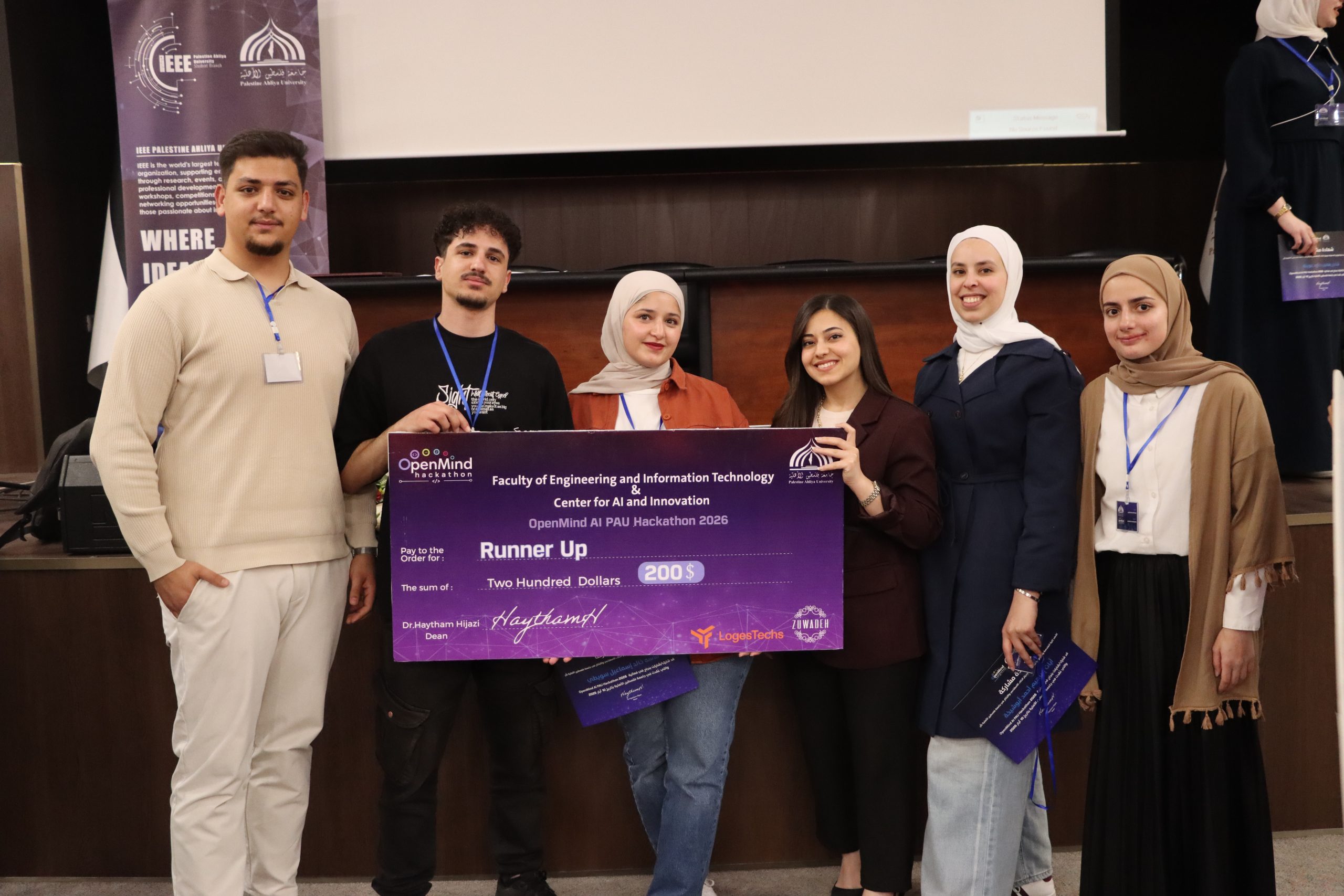
The second-place winner was the “AI NOVA” project, which aims to create a comprehensive visual identity for startups based on a detailed description of the project idea and business plan. It also enables the generation of diverse visual and marketing content, including videos, reels, animations, and promotional images, using artificial intelligence tools.
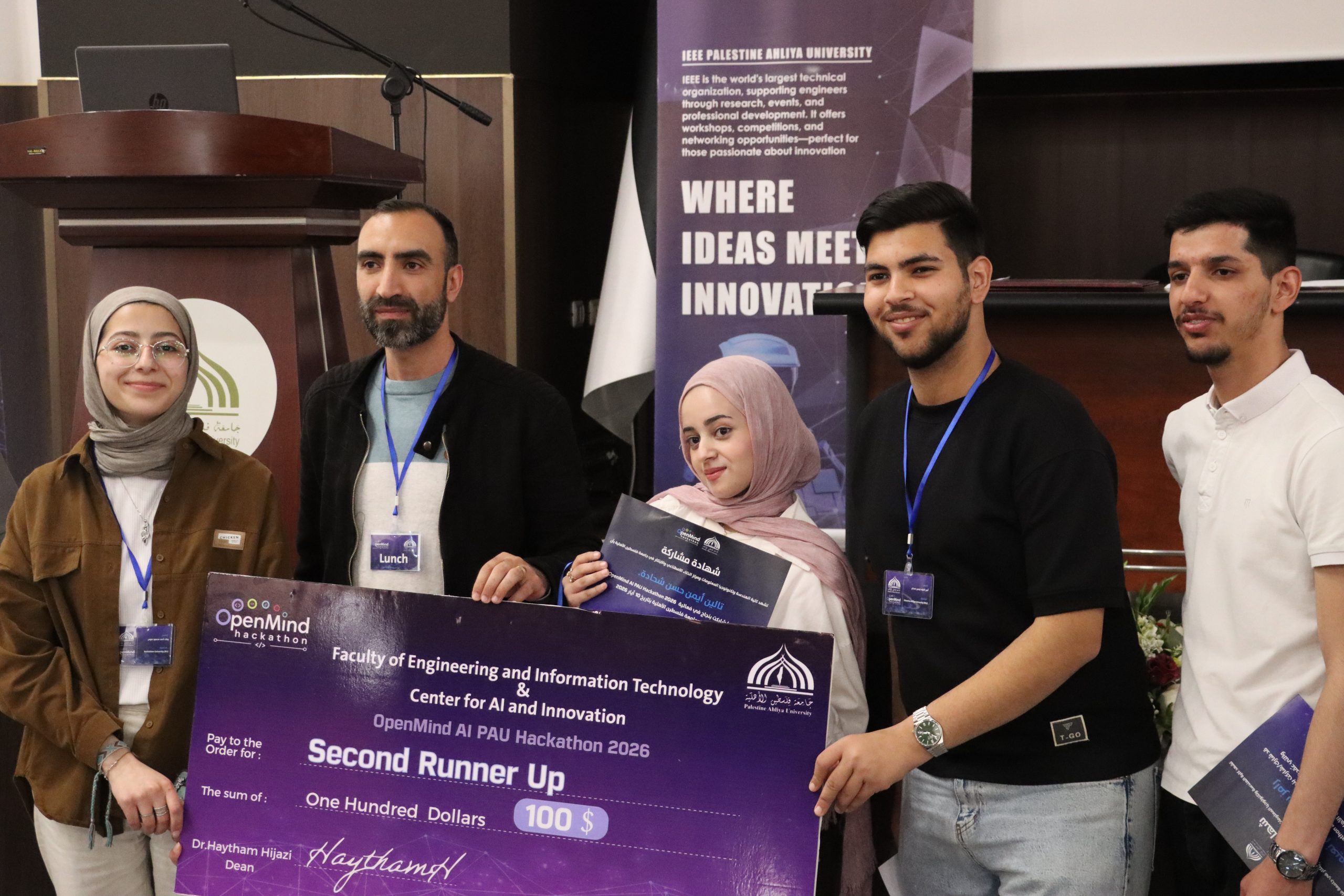
The third place was awarded to the “MediRoute” project, which aims to employ AI agents to identify the nearest ambulance or hospital during emergency situations and to intelligently direct healthcare services based on geographic location, time, and medical condition. This is achieved through the use of mapping systems, GPS technologies, and agentic artificial intelligence techniques.
The university affirmed that organizing this hackathon aligns with its commitment to fostering a culture of innovation and technological entrepreneurship, linking theoretical education with practical application, and empowering students to develop digital solutions that respond to the needs of both community and the labor market.