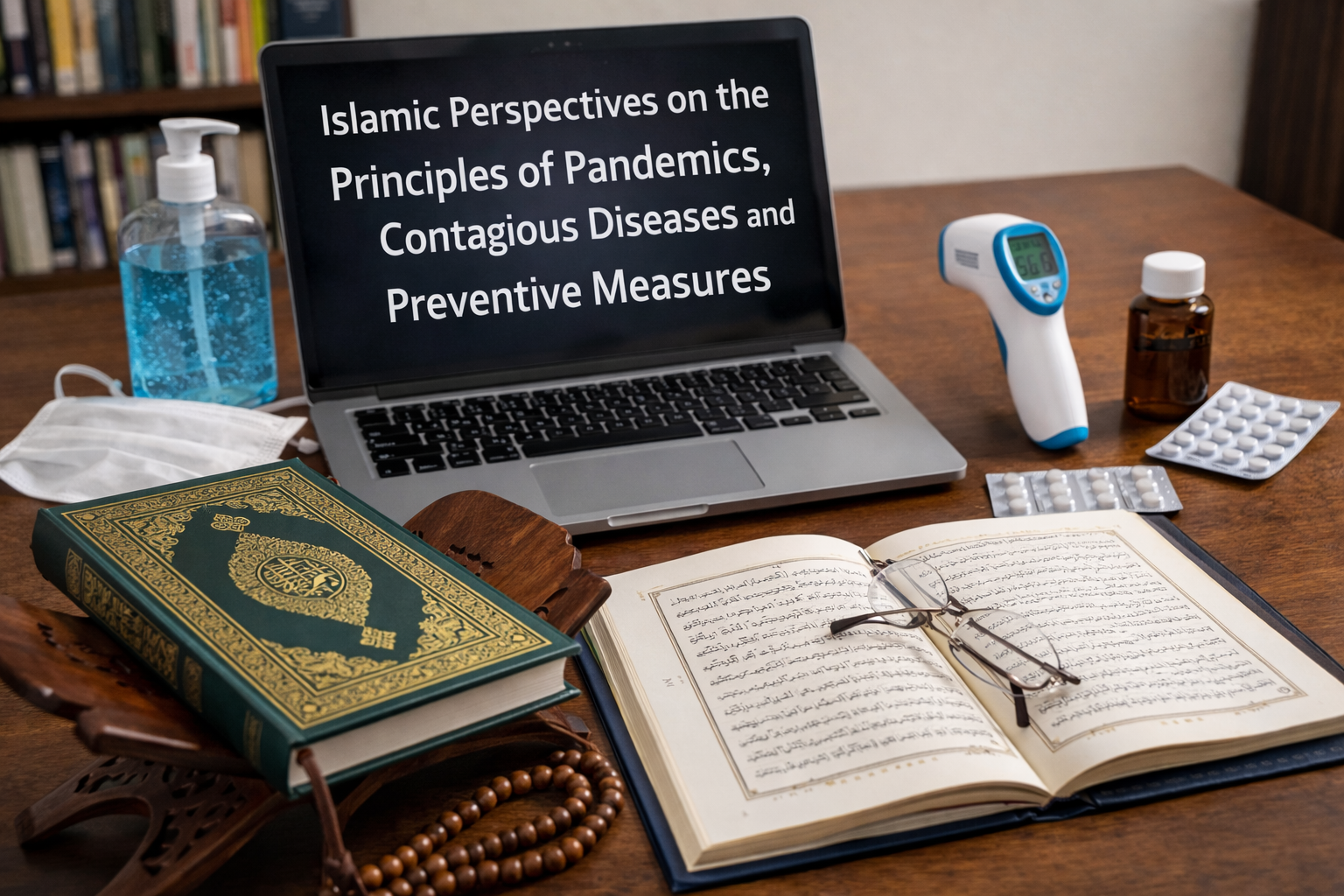
الدكتور سهيل الأحمد يشارك في نشر دراسة بعنوان “المنظورات الإسلامية حول مبادئ الأوبئة والأمراض المعدية والتدابير الوقائية”
ملخص البحث
The intention of self-preservation is one of the main principles and necessary objectives of the Islamic religion, Islam has worked through its teachings and legislation to protect it from harm and diseases. Epidemics and infectious diseases are among the most dangerous diseases affecting humans. Its effect is not limited to the individual’s health as it may extend to include social, cultural, and economic issues as well. The light was shed on those issues by Islam, who considered medical sciences one of the sciences that should be learned, and set’s controls for the practice of medical professions. The Islamic Legislation’s view of preserving the soul and preserving human dignity is a matter that is rooted in its rules, texts and principles, whether theoretical or practical, and this is due to the consideration that the fragrant biography of the Prophet Muhammad, may God’s prayers and peace be upon him, and his great directions serve to show the sublime values of civilization when infectious diseases and deadly viruses spread, which is what It is regulated by contemporary medical rules and establishes to establish it in the relationship of medicine with human societies in general and Islamic societies in particular, through the rules and principles that require the competent medical and health authorities to take measures and measures to regulate community relations in the event of the spread of infectious diseases, thus giving a bright picture of Islamic legislation that is consistent with medical provisions and procedures adopted in such cases.
كيفية الاستشهاد للبحث:
Jaradat, A., Al-Ahmed, S., & Mansour, H. (2025). Islamic Perspectives on the Principles of Pandemics, Contagious Diseases and Preventive Measures. In Intelligence-Driven Circular Economy: Regeneration Towards Sustainability and Social Responsibility—Volume 2 (pp. 423-428). Cham: Springer Nature Switzerland.
رابط البحث
https://link.springer.com/chapter/10.1007/978-3-031-74220-0_32